ThesisHub Research Resources
Thesis Writing: Building Your Research One Section at a Time
A thesis or dissertation is rarely written effectively from beginning to end in one continuous effort. Strong academic writing develops progressively as research questions, evidence, analysis, and conclusions become clearer.
Writing is part of the research process
Academic writing is not simply the final step that happens after the research is finished.
Writing helps researchers clarify ideas, test arguments, identify missing evidence, and discover relationships within their work.
A useful mindset
You are not writing down finished thinking. You are often using writing to develop the thinking itself.
Break a large project into manageable sections
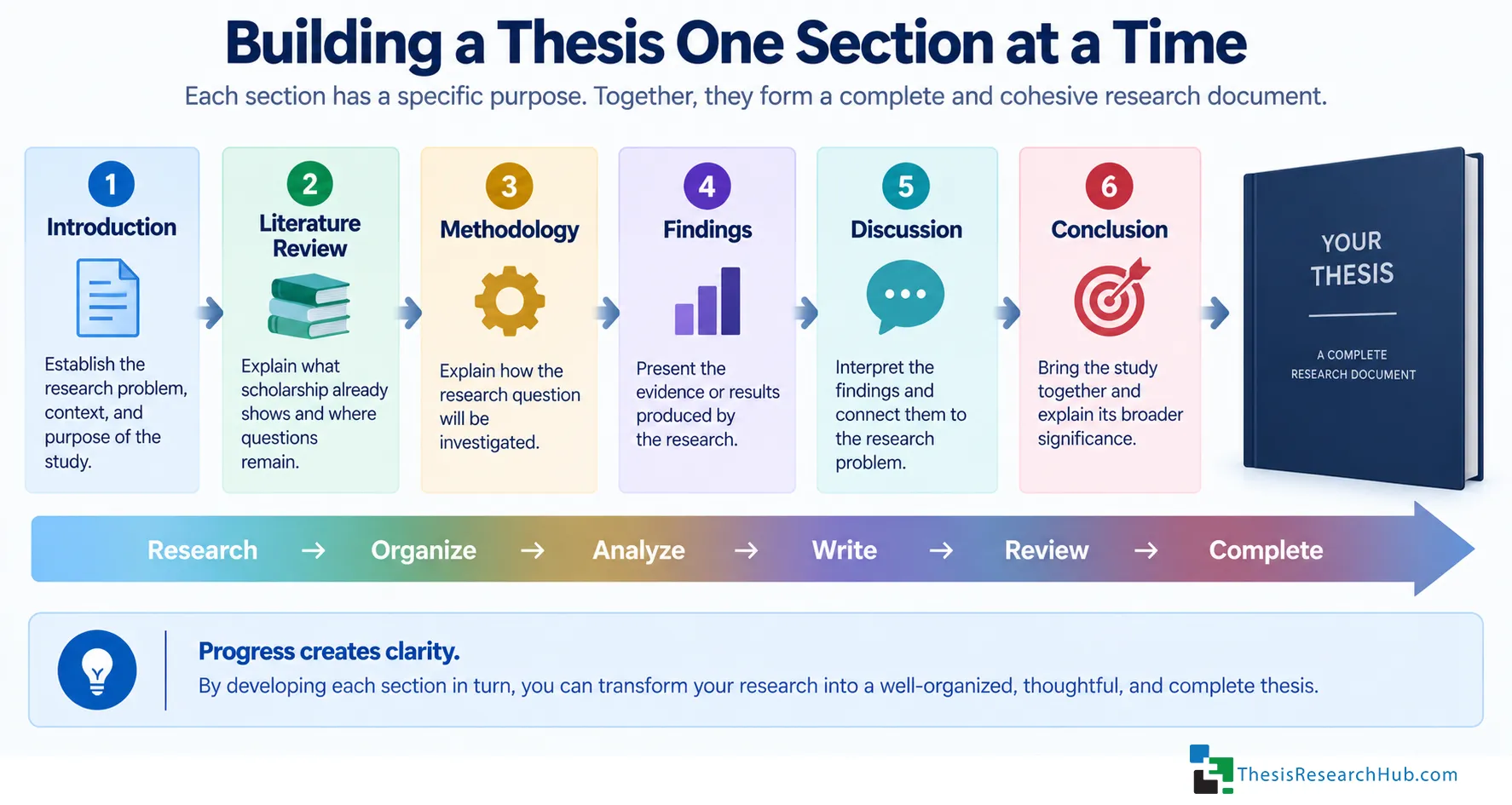
A thesis can feel overwhelming when viewed as one enormous document. It becomes much more manageable when divided into sections with specific purposes .
Introduction
Establish the research problem, context, and purpose of the study.
Literature Review
Explain what scholarship already shows and where questions remain.
Methodology
Explain how the research question will be investigated.
Findings
Present the evidence or results produced by the research.
Discussion
Interpret the findings and connect them to the research problem.
Conclusion
Bring the study together and explain its broader significance.
The exact structure varies by discipline and institutional requirements.
Build an outline from research questions, not empty headings
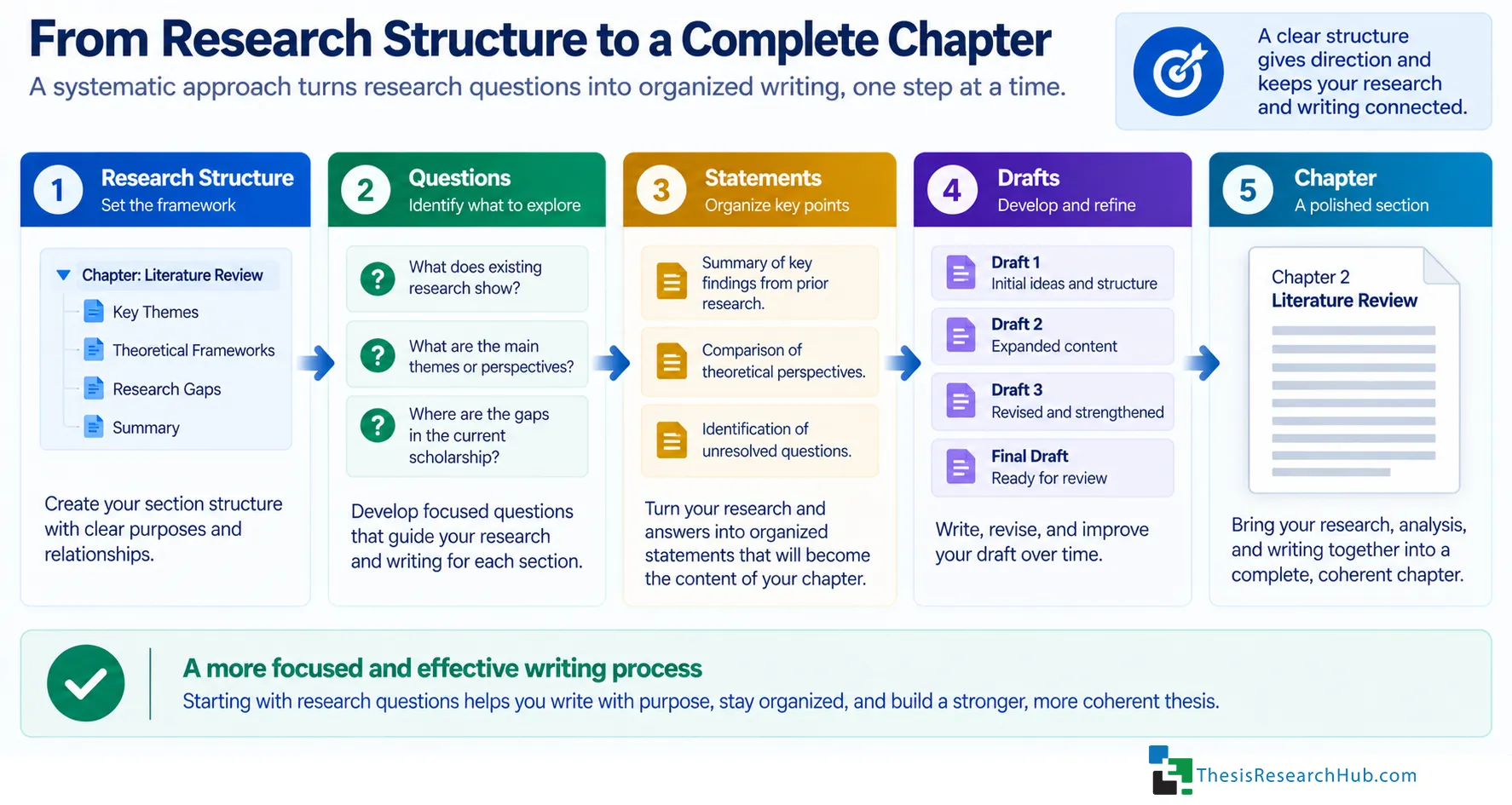
A traditional outline often begins with chapter headings and asks the researcher to decide immediately what belongs beneath each one.
ThesisHub approaches outlining differently. A research section can be developed through focused questions and statements that identify what the researcher needs to explain .
The ThesisHub approach
Instead of facing an empty chapter, the researcher can work through smaller intellectual tasks: What needs to be established? What evidence belongs here? What must the reader understand before moving forward?
Let research notes feed the outline
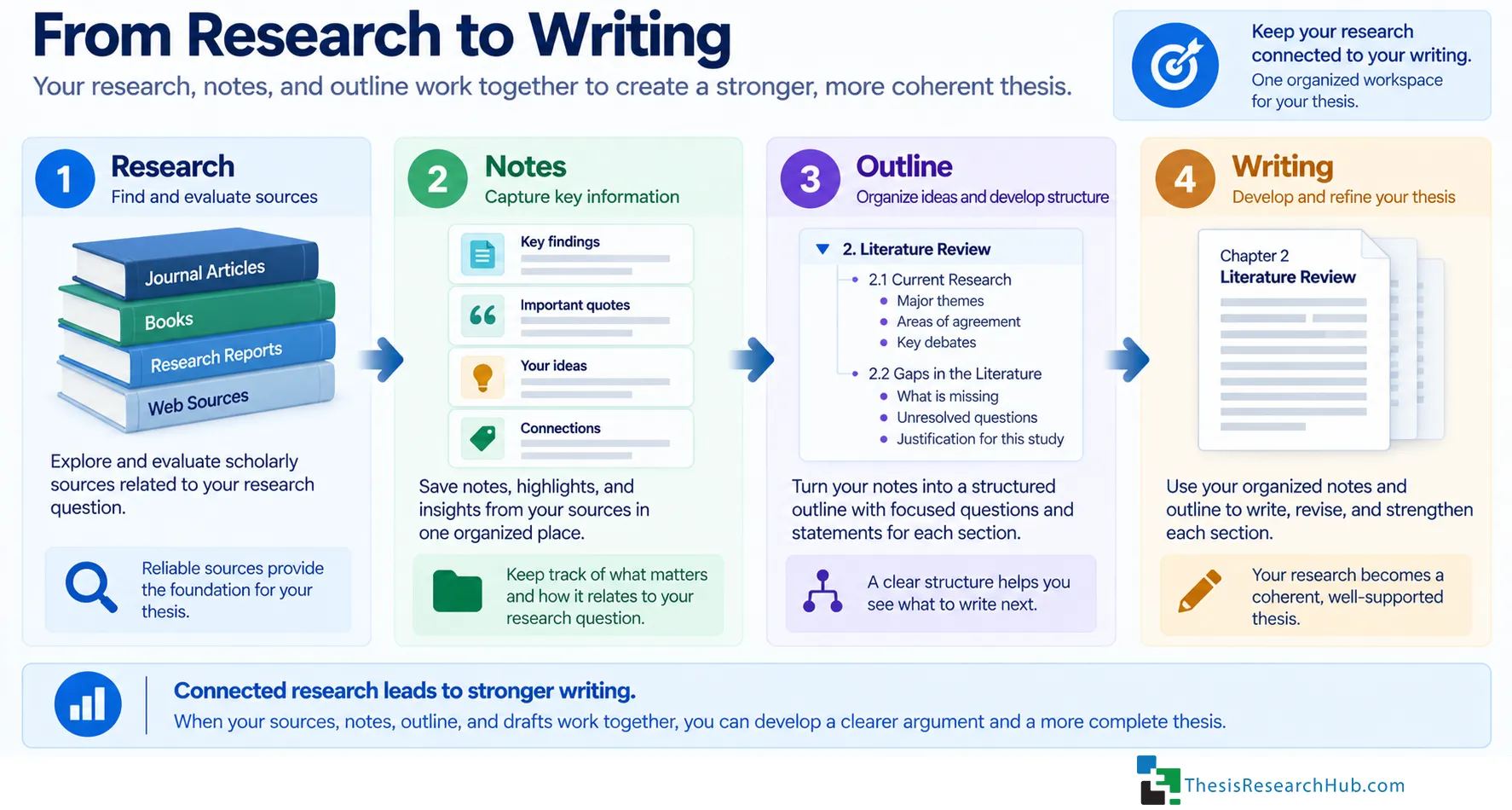
The strongest outlines do not exist separately from the research. They develop as sources are read, evidence is examined, and ideas become more precise.
1. Capture
Preserve observations, source insights, questions, and possible connections as research notes.
2. Organize
Connect useful ideas to the research structure and the questions that a section needs to address.
3. Develop
Turn organized ideas into drafts that can later be reviewed, revised, and assembled into the complete chapter.
This creates a more continuous path from research → notes → outline → writing , rather than treating each activity as a separate task.
Draft first. Improve deliberately.
Trying to perfect every sentence while creating the first draft can make academic writing unnecessarily slow.
The first draft has one important job:
Give you something real to revise.
Once ideas exist on the page, revision can focus separately on argument, evidence, organization, clarity, academic style, citations, and consistency .
Keep every section connected to the research question
Interesting material is not automatically relevant material.
Each major part of the thesis should contribute to investigating, explaining, or answering the central research question .
A useful revision question
“If I removed this paragraph, would the reader lose something necessary for understanding my research problem, evidence, or argument?”
A practical writing cycle
A finished thesis is generally the result of repeated improvement, not a single perfect writing session.
Continue Your Research
Related Research Library Articles
Explore related articles for additional guidance, explanations, and research strategies.
How ThesisHub Helps
Support the research process without losing sight of your project
ThesisHub is designed around progressive research writing. Researchers can organize their project structure, develop individual sections, maintain drafts, and gradually assemble those pieces into a complete research document.
Explore More Research Topics
Research Brainstorming
Develop ideas and turn broad interests into research directions.
Charts & Tables
Present research findings clearly with figures, charts, and tables.
Literature Review
Organize and synthesize scholarship around a research problem.
Thesis Review
Review structure, clarity, consistency, and completeness.
Thesis Formatting
Prepare a research document for institutional and publication requirements.