ThesisHub Research Resources
Thesis Formatting and Submission Preparation
A completed research project must usually meet detailed institutional formatting requirements before it can be accepted for submission. Planning for those requirements early can prevent extensive corrections near the end of the project.
Your institution's requirements come first
Thesis and dissertation formatting is not governed by one universal set of rules.
Universities, graduate schools, departments, and programs may establish requirements that take precedence over general recommendations or default style conventions .
Always work from the current requirements supplied by your institution.
Templates, older theses, and advice from other students can be useful, but they may not reflect the rules that currently apply to your project.
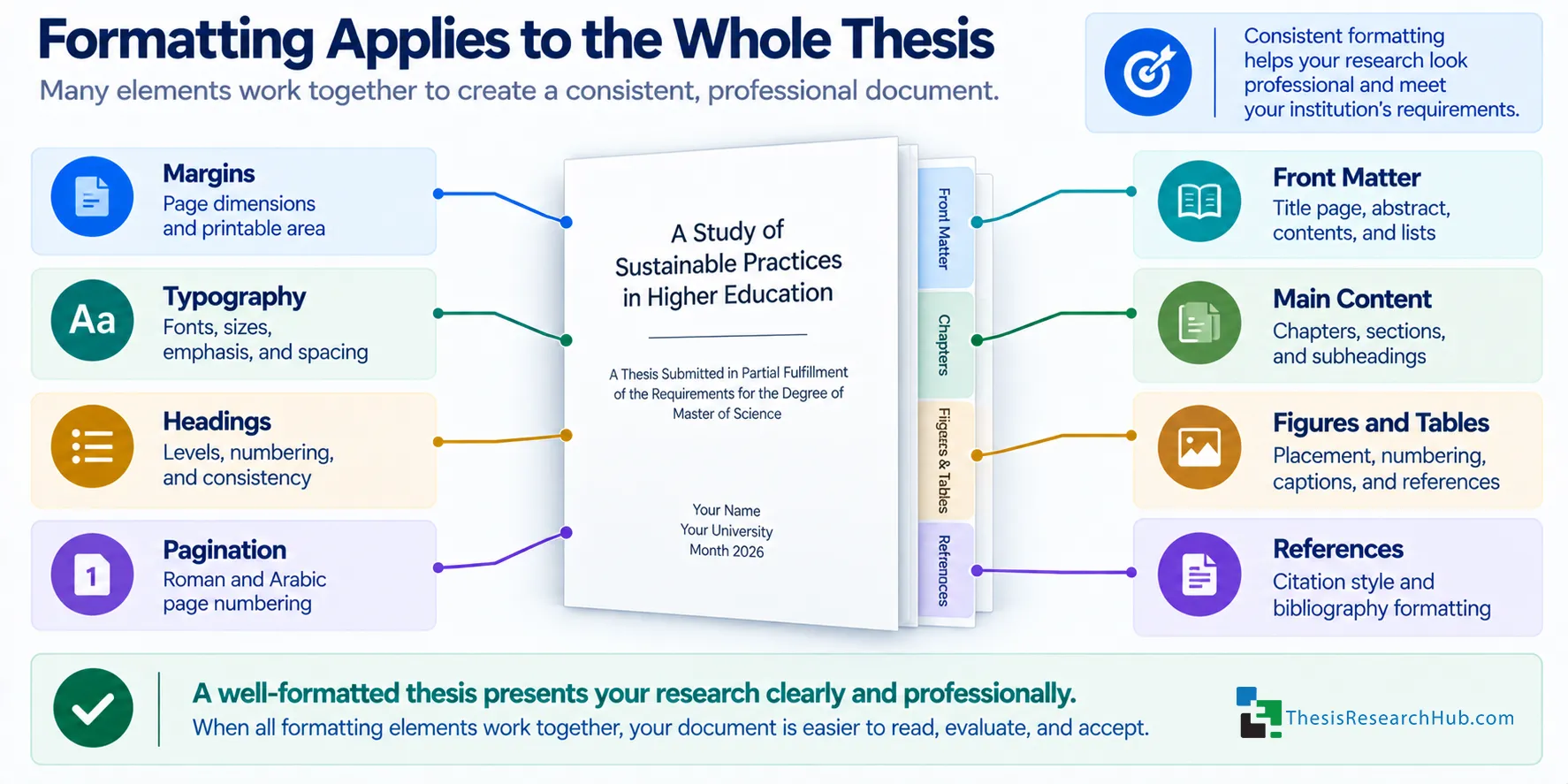
Formatting reaches across the entire document
Formatting is much more than choosing a font.
Margins
Page dimensions and printable area
Typography
Fonts, sizes, emphasis, and spacing
Headings
Levels, numbering, and consistency
Pagination
Roman and Arabic page numbering
Front Matter
Title page, abstract, contents, and lists
Figures
Placement, numbering, captions, and references
Tables
Titles, placement, numbering, and lists
References
Citation and bibliography formatting
Front matter may follow different rules
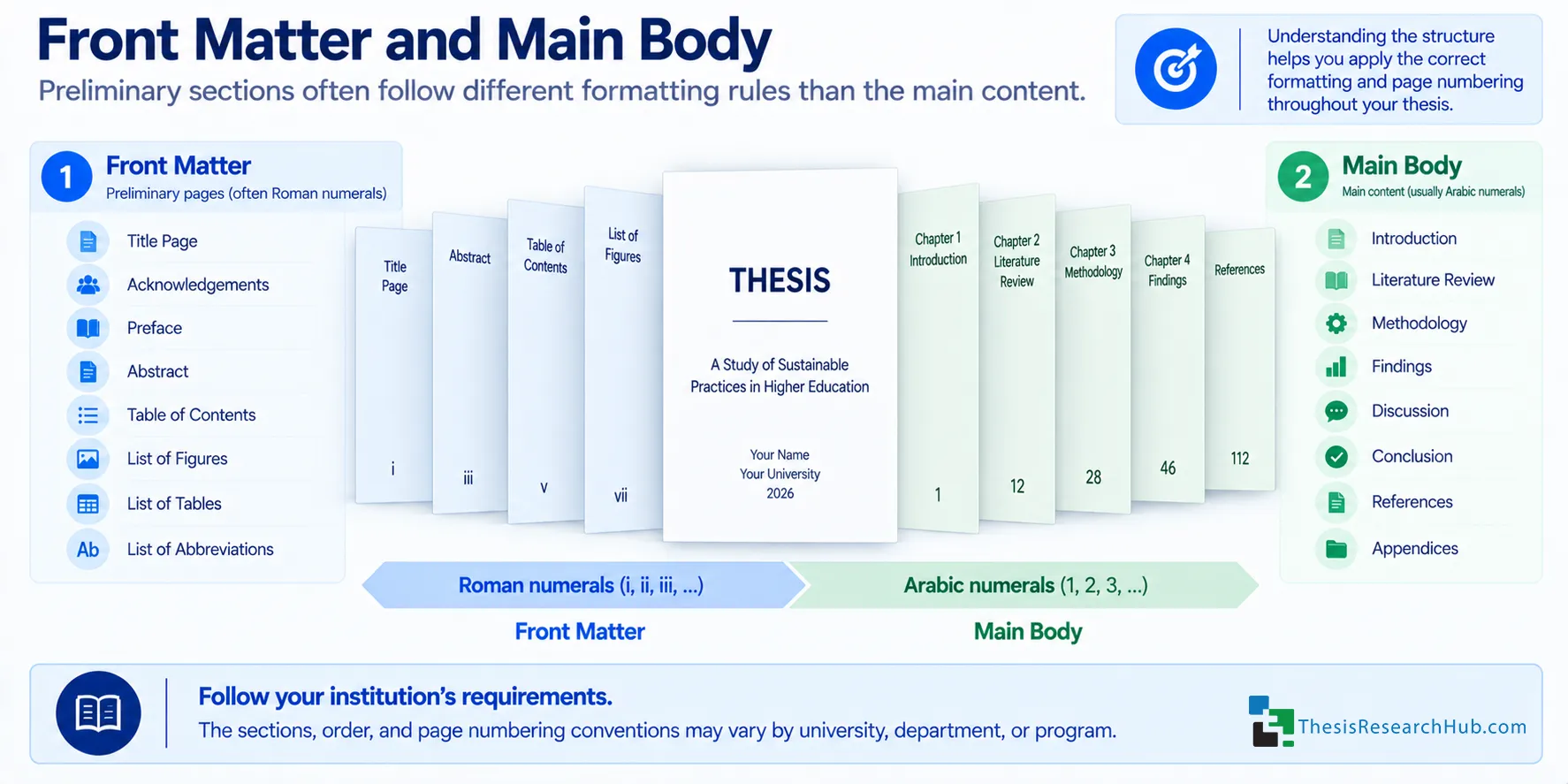
Preliminary sections often behave differently from the main body of the thesis.
Front matter can include:
Some institutions require different page-numbering conventions or special placement rules for these sections.
Figures and tables deserve a separate check
Visual elements can create problems late in the submission process if numbering and placement are not maintained consistently.
Verify
- ✓ Figure and table numbering
- ✓ Captions and titles
- ✓ References within the text
- ✓ Placement requirements
Also verify
- ✓ List of Figures entries
- ✓ List of Tables entries
- ✓ Source information where required
- ✓ Page references
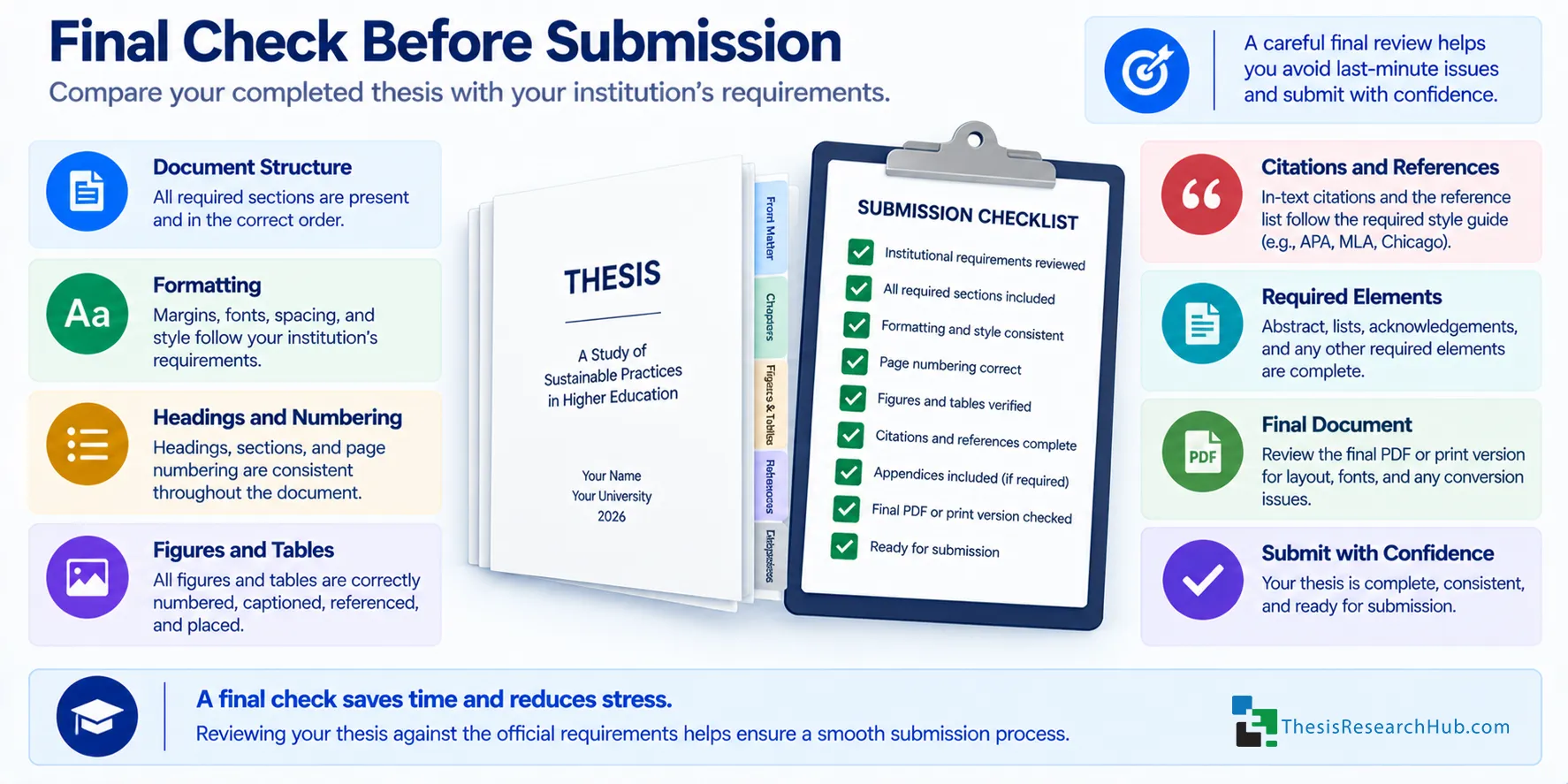
Do the final review against the requirements themselves
When the document appears finished, compare it directly with the institution's requirements rather than relying on memory.
Final preparation
Content complete does not always mean submission ready.
A final requirements review helps identify structural, formatting, and presentation problems before the manuscript is delivered for approval.
Continue Your Research
Related Research Library Articles
Explore related articles for additional guidance, explanations, and research strategies.
How ThesisHub Helps
Support the research process without losing sight of your project
ThesisHub is designed to keep research content, document structure, figures, tables, requirements, and publication preparation connected so the final manuscript can be assembled more consistently.
Explore More Research Topics
Research Brainstorming
Develop ideas and turn broad interests into research directions.
Thesis Writing
Develop academic writing progressively throughout a research project.
Charts & Tables
Present research findings clearly with figures, charts, and tables.
Literature Review
Organize and synthesize scholarship around a research problem.
Thesis Review
Review structure, clarity, consistency, and completeness.